
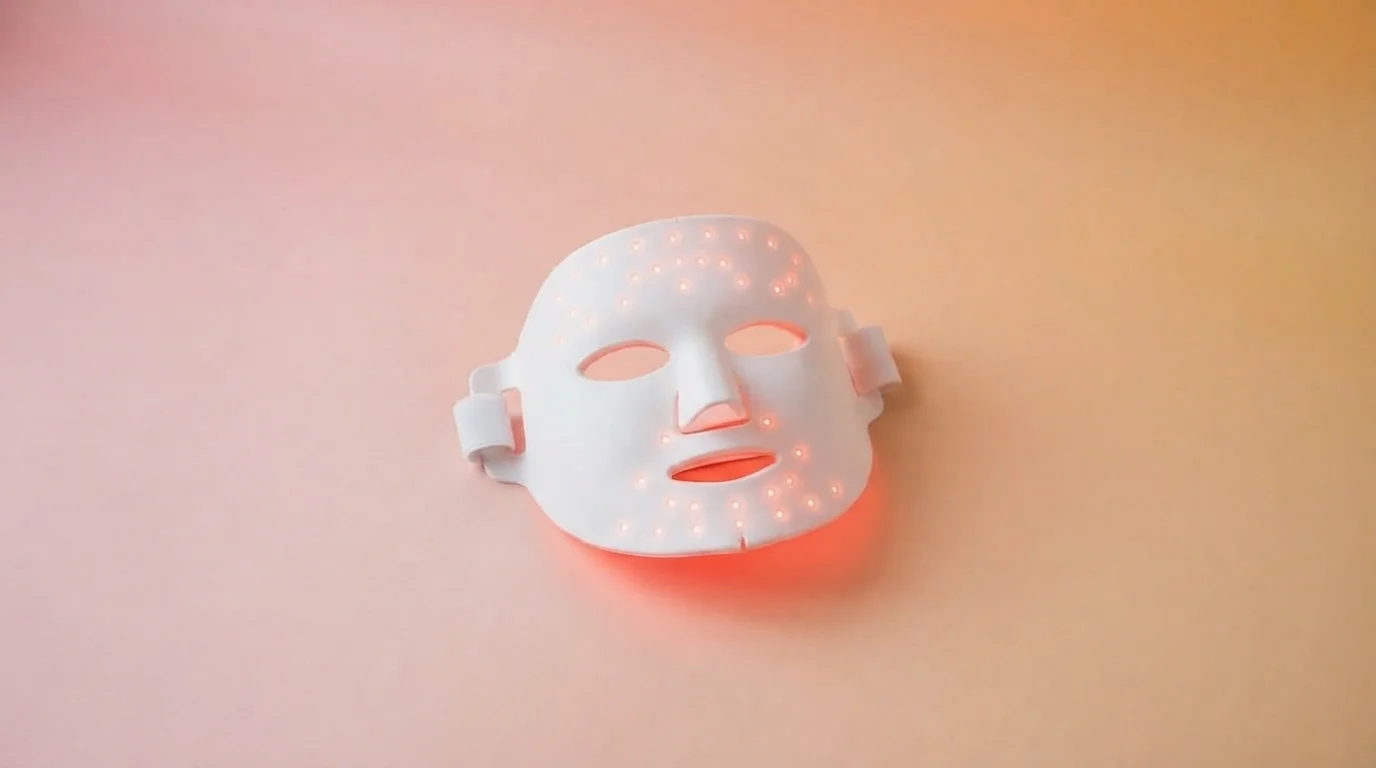
Red light therapy has gone from a niche dermatology treatment to something you'll see on every other skincare shelf and Instagram ad. But when a treatment gets this trendy, I think it's worth asking the boring but important question: does it actually work, or is it just a glowing gadget that makes your skin feel pampered for twenty minutes?
I've spent a lot of time going through the actual research behind red light therapy rather than the marketing copy around it, and I want to walk you through what I actually believe holds up.
What Red Light Actually Does to Ageing Skin
Red light, typically in the 630–660nm range, penetrates around 1–2mm into the skin, deep enough to reach the dermis, where collagen and elastin are produced. Your skin cells absorb this light energy through structures called mitochondria, which triggers increased cellular activity, including collagen synthesis.
In plain terms: it nudges your skin into producing more of the structural proteins that keep it firm and smooth, the same proteins that naturally decline as we age.
Is There Actually Science Behind This, or Is It Just Marketing?
This is the fair question, and honestly, I believe the answer is yes, there's real evidence, but it's not miraculous.
Multiple peer-reviewed studies have found that red and near-infrared light therapy leads to measurable improvements in skin texture, fine lines, and collagen density after consistent use over several weeks. Dermatologists used red light in clinics for years before it became an at-home consumer product, and that's part of why I take it more seriously than most skincare trends, it wasn't invented by a marketing team.
That said, I'd be doing you a disservice if I didn't flag this: the strength of the effect depends heavily on the device. A gadget with weak, poorly-calibrated LEDs simply will not deliver the same results as the devices used in clinical studies, no matter what the packaging claims.
Look for a stated wavelength of 630–660nm on the box or product page. If a device just says "red light" with no wavelength listed, I'd treat that as a sign it hasn't been through proper clinical testing.
Red Light vs Other Anti-Ageing Wavelengths
🔴 Red Light (630–660nm)
- Boosts collagen production
- Reduces fine lines
- Improves texture and tone
- Penetrates 1–2mm deep
🟠 Near-Infrared (800–900nm)
- Penetrates deeper, up to 5mm
- Supports tissue repair
- Enhances red light's effects
- Reduces chronic inflammation
In my experience researching this, the devices that combine red and near-infrared tend to perform better overall, they work at different depths and reinforce each other rather than duplicating the same effect.
How Long Before You See Results?
This is where I think a lot of people give up too early. Red light therapy is not a same-day glow treatment, even though your skin will often look brighter immediately after a session simply from increased blood flow.
Real structural change, meaning actual new collagen, takes time to build:
- Weeks 1–3: Skin may feel slightly firmer and more hydrated, but visible change is minimal
- Weeks 4–6: Early improvements in texture and tone become noticeable
- Weeks 8–12: Genuine reduction in fine lines and improved firmness for most consistent users
What I'd Actually Look for Before Buying Anything
I'd rather give you the criteria I use myself than tell you which specific device to buy, since what suits your skin, budget and routine will be different from the next person's. Here's what I believe genuinely matters:
- A stated wavelength, ideally 630–660nm for red light, printed clearly on the product page, not just a vague "anti-ageing light" claim
- LED count and coverage, more individual LEDs generally means more even light delivery across the whole face, not just patches
- CE marking if you're buying in the UK or Europe, this is the relevant safety standard to check for, rather than relying on FDA clearance alone, which is a US standard
- Realistic session length, 10 to 20 minutes is standard; if a device promises results from a 60-second session, I'd be sceptical
- A return policy, given how much some of these devices cost, you want the ability to send it back if it doesn't suit your skin
I genuinely believe the wavelength and LED quality matter more than the brand name on the box, and that's true whether you're shopping in the UK, elsewhere in Europe, or comparing options from further afield like South Asia or the US, where pricing and availability can look quite different.
Is Red Light Therapy Safe for Everyone?
Generally yes. Red light is non-UV and non-thermal, so there's no risk of sunburn or heat damage. A few situations call for caution:
- Photosensitive medications (certain antibiotics, isotretinoin) can increase sensitivity to light
- Active skin conditions such as lupus should be checked with a dermatologist first
- Most manufacturers recommend avoiding use during pregnancy as a precaution
If you're taking photosensitising medication, or have a diagnosed skin condition, check with your GP or dermatologist before starting red light therapy.
Final Thoughts
I think red light therapy is one of the rare skincare trends that actually has solid evidence behind it, but it rewards patience and consistency far more than it rewards spending the most money on the flashiest device. If you're considering it, I'd focus on the wavelength, the LED coverage, and whether you'll realistically use it three times a week for two to three months, because that consistency is what determines your results, not the brand you choose.
Not Sure If Red Light Is Right for Your Skin?
"Every mask on the market claims to be 'the one.'"
Get matched to the right mask for your skin, goal and budget in 60 seconds.
Find my mask →Disclaimer: This article is for informational purposes only and does not constitute medical advice. Always consult a qualified healthcare professional before starting any new skincare treatment.