
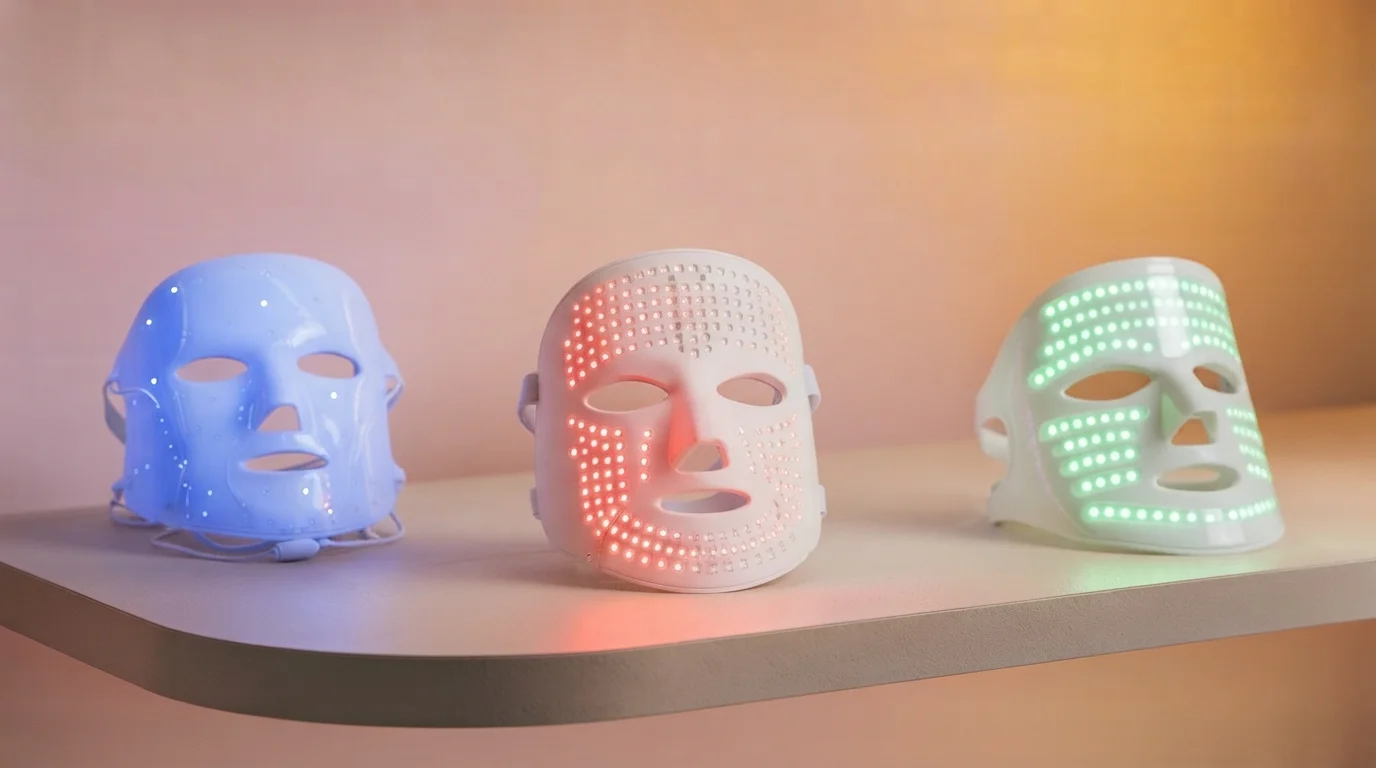
Whenever I get asked about LED face masks, safety is usually the second question, right after "does it actually work?" And I think that's the right instinct. Anything you strap to your face and switch on deserves a proper safety check, not just a glowing five-star review.
I want to be upfront: for most people, LED face masks are genuinely one of the gentler treatments available in skincare. But "genuinely gentle for most people" and "risk-free for absolutely everyone" are two very different claims, and I think it's worth being precise about which one is actually true.
Why LED Light Is Different from UV Light
I think this is the single most important distinction, and it gets glossed over a lot. LED face masks do not use ultraviolet light, the kind responsible for sunburn and long-term UV skin damage. They use visible and near-infrared wavelengths that sit outside the UV spectrum entirely.
They're also non-thermal, meaning the light itself doesn't generate the kind of heat that could burn or damage tissue, unlike some laser-based clinical treatments. This is really the foundation of why LED therapy has such a strong safety profile compared to a lot of other skin treatments.
I'm not just taking the industry's word for this either. A 2022 randomized controlled dose-safety trial run through a US dermatology research group actually tested red LED light at fluence levels well above what any home mask would use, specifically to find the point where side effects start to appear. The researchers found that even at those elevated levels, side effects were limited to mild, temporary redness and, at the highest doses only, occasional blistering, with no serious adverse events recorded. That's a reassuring result on its own, but I found one part of the study particularly worth flagging: they also found that darker skin tones showed greater photosensitivity to red LED light than lighter skin tones, meaning the safe threshold isn't identical for everyone. I think that's a genuinely useful, underreported point for anyone assuming "LED is LED" regardless of skin tone.
Who Should Be More Cautious
I don't think it's fair to tell you "it's totally safe for everyone" when that's not quite accurate. Here's who I'd genuinely encourage to check with a GP or dermatologist first:
- Anyone on photosensitising medication. Certain antibiotics, acne medications like isotretinoin, and even some herbal supplements such as St John's Wort can increase your skin's sensitivity to light.
- Anyone with a diagnosed light-sensitive condition, such as lupus or porphyria.
- Anyone who is pregnant. Most manufacturers recommend avoiding LED therapy during pregnancy as a precaution, even though I'm not aware of strong evidence of harm, it's simply an under-studied area.
- Anyone with epilepsy, since flashing or pulsing light modes on some devices could act as a trigger. I'd always check a device's specifications for this before buying if this applies to you.
- Anyone with naturally darker skin, given the photosensitivity difference the research above points to, it's worth starting on a lower setting or shorter session if your device allows it.
If any of the above applies to you, I'd genuinely recommend speaking to your GP or a dermatologist before starting LED therapy, rather than assuming it's fine because the packaging says "safe for all skin types."
What About Eye Safety?
This is one I get asked about often. Most LED face masks are designed to be used with your eyes closed, and many include some form of eye protection, whether that's built-in padding, a design that avoids direct eye exposure, or separate protective goggles.
I'd say: always follow the manufacturer's specific guidance here rather than assuming your device works the same way as one you've seen reviewed elsewhere. Not every mask handles eye safety the same way, and it's worth the two minutes it takes to actually read that section of the instructions.
If a device doesn't clearly explain its eye safety design anywhere on the product page or manual, I'd treat that as a red flag rather than an oversight.
What Proper Certification Actually Looks Like
I think this is where a lot of the real risk actually sits, not in the light itself, but in poorly made devices that were never properly tested.
In the UK, the mark to look for is CE (or the UK-specific UKCA mark), which confirms a product has met recognised safety standards. I'd treat this as genuinely non-negotiable, not a nice-to-have. A device with no visible certification, vague manufacturing information, or suspiciously low pricing compared to everything else on the market is one I'd be cautious about.
✅ Signs of a Properly Tested Device
- CE or UKCA marking clearly stated
- Specific wavelengths listed in nanometres
- Clear eye safety guidance
- Established manufacturer with UK contact details
🚩 Signs I'd Be Cautious Of
- No certification mentioned anywhere
- Vague "multi-colour light" claims, no wavelengths
- No eye safety information at all
- No verifiable manufacturer or return policy
Are There Any Genuine Side Effects?
For most people, no, beyond mild, temporary redness or warmth immediately after a session, which typically settles within an hour. This lines up with what the dose-safety research I mentioned earlier found too, mild and short-lived redness was the most common effect reported, even at doses well beyond typical home use.
If you experience anything beyond that, such as prolonged redness, irritation, or discomfort, I'd stop using the device and speak to a dermatologist rather than pushing through it in the hope it's just an adjustment period.
My Honest View
I genuinely believe LED face masks are one of the safer at-home skincare technologies available right now, precisely because they avoid UV light and heat altogether. But I don't think "safe" should be treated as a blanket, unconditional word here. The real safety work is on you as the buyer: checking for genuine certification, being honest with yourself about medication, conditions, or skin tone factors that might apply, and following the eye protection guidance properly rather than skipping past it.
Do that, and I think the risk profile here is genuinely low. Skip it, and you're not really assessing safety at all, you're just hoping for the best.
Not Sure If LED Therapy Is Right for You?
"Pregnant, on medication, or unsure if LED is safe for you?"
Get a clear Safe / Caution / Consult answer before you spend a penny.
Check safety →Disclaimer: This article is for informational purposes only and does not constitute medical advice. Always consult a qualified healthcare professional before starting any new skincare treatment.